
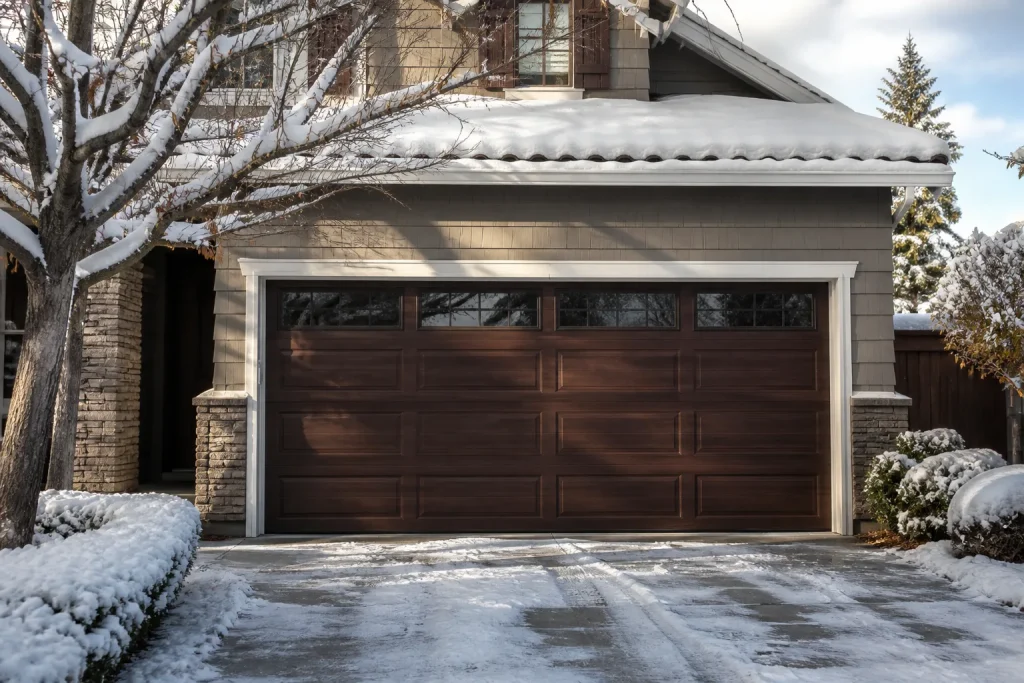
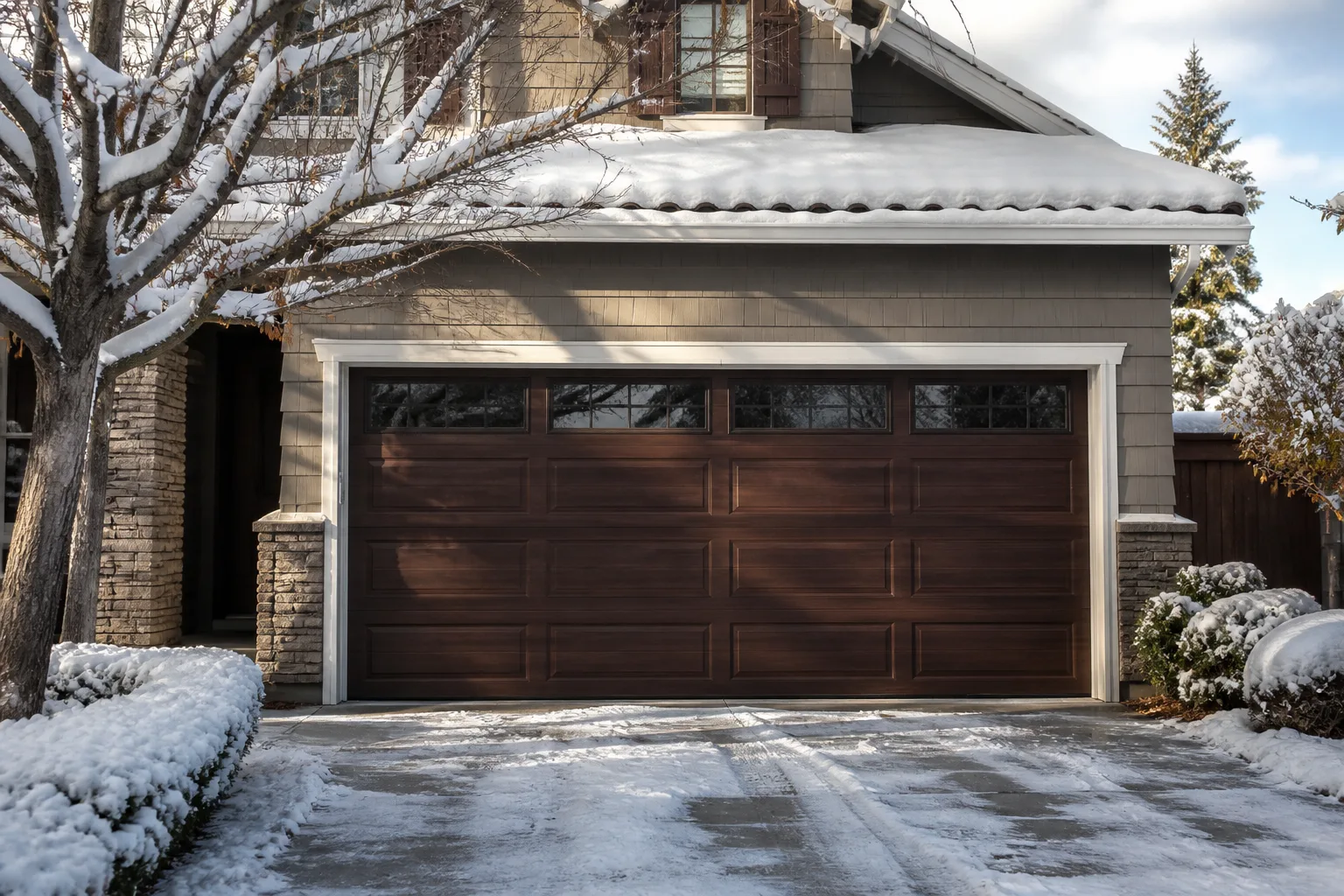
Preparing Your Home’s Garage Door for Winter in San Jose
Garage door winter preparation in San Jose means addressing the specific wear that comes from cool nights in the mid-30s, warm afternoons in the 60s, and heavy condensation cycles that degrade seals and thicken lubricants. A focused 45-minute inspection and tune-up in November prevents the cold-morning failures that spike our call volume every January and February. If you’d rather have a pro handle it, Beacon Garage Door California offers free estimates — call (866) 780-5452.
San Jose doesn’t get Midwest winters, but that almost makes it worse. Homeowners here skip seasonal prep entirely, then wonder why their door groans, sticks, or snaps a spring on the first genuinely cold morning. We’ve spent nine years tracking the patterns, and the damage is predictable. Here’s what actually matters for your garage door before winter sets in.
Why San Jose’s Winter Pattern Destroys Garage Doors Differently
Most winter garage door advice assumes snow load and subzero temperatures. San Jose’s problem is the swing. Nighttime lows in the mid-30s followed by afternoon sun in the upper 50s or 60s create a daily expansion-contraction cycle that wears components faster than steady cold ever would.
The heavy dew and occasional rain from November through March add another layer. Moisture settles into every gap, then evaporates partially, then settles again. We’ve replaced bottom seals in Almaden Valley garages where the concrete was permanently stained from years of slow water seepage. We’ve fixed opener logic boards in Willow Glen that failed after moisture wicked up through compromised weatherstripping and corroded the terminals.
In colder, drier climates, a door faces one enemy: temperature. In San Jose, it’s temperature plus moisture plus the rapid cycling between them. That combination degrades rubber seals, thickens grease unevenly, and causes metal fatigue in springs that never fully stabilize.
Here’s what we check first on every winter prep call:
- Bottom seal integrity and track alignment — gaps as small as 1/8 inch admit water and rodents
- Spring lubricant viscosity — summer grease turns to putty below 40°F
- Opener force settings — calibrated in warm weather, they underperform when components stiffen
- Panel and hinge moisture exposure — early rust spots that expand through winter
Switching to Winter-Grade Lubricant Before November
This is the single most overlooked step, and it’s the one that prevents the 6 AM emergency calls we get every January. The standard lithium grease most homeowners (and some installers) apply in summer thickens dramatically as temperatures drop. By the time it’s in the mid-30s, that grease has the consistency of modeling clay. The opener motor strains, the springs don’t release smoothly, and the added torsional stress snaps springs that were already near end of life.
We switch to a winter-grade silicone or low-temp lithium formulation on every prep job in San Jose. The viscosity difference is substantial — at 35°F, the right lubricant still flows where standard grease seizes. We apply it to torsion springs, extension springs, rollers, and hinge pins. Not the track itself; lubricated tracks collect grit and actually increase friction.
The process takes about ten minutes with a door in the down position. We wipe old grease completely, apply a thin even coat, and cycle the door manually to distribute it. If you’re doing this yourself, avoid WD-40 or general-purpose sprays — they attract dust and wash out in moisture. Use a product rated for below-freezing operation.
We’ve replaced springs in Cambrian Park homes where the homeowner had “just had maintenance” in July. The summer grease did more harm than good by January.
Replacing the Bottom Seal Before Rainy Season
A worn bottom seal is a $30 part that prevents $300+ in damage. In San Jose’s winter pattern, the seal is the door’s only defense against water intrusion, rodent access, and the concrete degradation that comes from constant damp contact.
The standard PVC or rubber seal compresses against the floor threshold. Over a hot San Jose summer, that material hardens and develops micro-cracks. Then winter arrives, the material contracts slightly in cold, and those cracks open. Every morning dew and every rain event pushes moisture through. We’ve pulled seals in Blossom Valley where the underside was fuzzy with mold and the concrete had begun spalling from years of saturation.
Replacing the seal requires releasing the old retainer, sliding out the worn gasket, and pressing in new material cut to length. The retainer itself sometimes corrodes and needs replacement. We always check track alignment when we do this — a seal compressed unevenly wears twice as fast.
For homes with significant floor slope or gaps, we sometimes recommend a bulb-style seal or an additional threshold strip. The goal is zero visible daylight when the door is closed.
Testing Auto-Reverse in Cold Conditions
Every garage door opener manufactured after 1993 has auto-reverse — it should stop and reverse when encountering resistance. But the force required to trigger that reverse is calibrated at installation, usually in moderate weather. When cold stiffens rollers, hinges, and the door itself, the opener may apply excessive force before the safety mechanism engages.
This is a genuine safety issue. A door that reverses properly at 70°F can fail to reverse on a 35°F morning if the mechanism hasn’t been checked. The test is simple: place a 2×4 flat on the floor centered under the door path, and close the door. It should reverse on contact. If it doesn’t, the force setting needs adjustment.
We also test the photoelectric sensors — the infrared beams that reverse the door if interrupted. Condensation on lenses, spider webs, or slight misalignment from summer vibration can disable them. In San Jose’s damp winter mornings, we’ve seen perfectly functional sensors fail simply because dew formed on the housing and refracted the beam.
Adjusting force settings requires accessing the opener logic board, which varies by manufacturer. We work on your brand — LiftMaster, Chamberlain, Genie, Clopay, Amarr, Wayne Dalton, Craftsman, and Raynor — so we know the specific adjustment procedure for each. If you’re unsure of your opener model or uncomfortable accessing high-voltage components, this is worth a service call.
Insulated vs. Non-Insulated Doors: Does It Matter in San Jose?
We get this question frequently from homeowners replacing doors in Almaden, Evergreen, and the surrounding San Jose hills. The honest answer: it depends on how you use the space.
San Jose’s winter temperature variation is real but moderate. An attached garage with a non-insulated door will typically stay within 10-15°F of outdoor temperature. With an insulated door (usually polyurethane or polystyrene core, R-value 6-12), that gap narrows to 5-10°F. The energy savings on your home’s heating bill are measurable but modest — perhaps $10-20 monthly in peak winter for a typical two-car garage with living space above or adjacent.
Where insulation pays more clearly is comfort and durability. If you use the garage as workshop, gym, or storage for temperature-sensitive items, the stabilized environment matters. Insulated doors also dampen street noise, which homeowners near busy San Jose corridors appreciate. And the sandwich construction — steel-poly-steel — resists the denting and warping that single-layer doors suffer in our temperature-swing climate.
We’ve installed insulated Clopay and Amarr doors in San Jose homes where the homeowner initially balked at the premium. A year later, the consistent panel alignment and quieter operation are what they mention first, not the energy savings.
For a detached garage used only for vehicle storage, non-insulated is often fine. For attached garages with living space influence, or for anyone who spends time in the space, insulated is worth the upgrade.
When to Call a Pro
Most of this prep is straightforward, but there are boundaries. We don’t recommend homeowners adjust torsion springs — the stored energy is genuinely dangerous, and we’ve treated injuries from well-intentioned DIY attempts. If your door has a broken spring, frayed cable, or opener electrical issue, that’s our job.
We also find that homeowners who’ve done their own winter prep often miss the subtle signs: slight track misalignment, early roller wear, or opener drive gear degradation that shows only under load. Our winter tune-up includes full mechanical inspection, and we’ll tell you what it needs without upselling what it doesn’t.
Related services in San Jose: Garage Door Repair in San Marcos, Garage Door Installation in San Marcos, and Garage Door Opener in San Marcos.
The Bottom Line
San Jose’s winter garage door problems are preventable with a focused November prep routine: switch to winter-grade lubricant, replace the bottom seal, test safety systems, and assess whether your current door suits how you actually use the space. The 45 minutes spent now eliminates the cold-morning failures that spike our emergency calls every January.
After nine years and 464 customer reviews, we’ve learned that the homeowners who prep in November never regret it. The ones who don’t call us in February, usually at the worst possible moment. If you want a professional winter tune-up in San Jose, Beacon Garage Door California offers free estimates — call (866) 780-5452. Kevin and his team will tell you exactly what your door needs.
Frequently Asked Questions
A professional winter prep service in San Jose typically runs $89-$150, depending on whether seal replacement or minor adjustments are needed. Full spring or opener repairs are additional. Call (866) 780-5452 for an exact quote — estimates are free.
No. WD-40 is a solvent and light penetrant, not a lubricant, and it washes out in moisture. For San Jose’s wet winter conditions, use a silicone-based or low-temp lithium grease rated for below-freezing operation. The wrong product attracts grit and hardens in cold, increasing wear on springs and rollers.
Sticking on cold mornings almost always indicates thickened lubricant, moisture-swollen bottom seal, or metal contraction causing slight track misalignment. In San Jose’s climate, the temperature swing from afternoon to overnight is enough to change clearances by fractions of an inch. A winter tune-up addresses all three causes.
In San Jose’s climate with heavy dew and winter rain, inspect the seal annually and plan replacement every 2-3 years. Signs it’s time: visible cracking, compression set (no longer springing back to shape), daylight visible under the closed door, or water staining on the garage floor after rain.
Written by Kevin Ardila, Founder & Lead Installer at Beacon Garage Door California, serving San Jose since 2017.
Need Garage Door Help?
Call Beacon Garage Door California — licensed & insured, here with fast after-hours help in California.
(866) 780-5452