
5 Mistakes to Avoid With Garage Door Parts
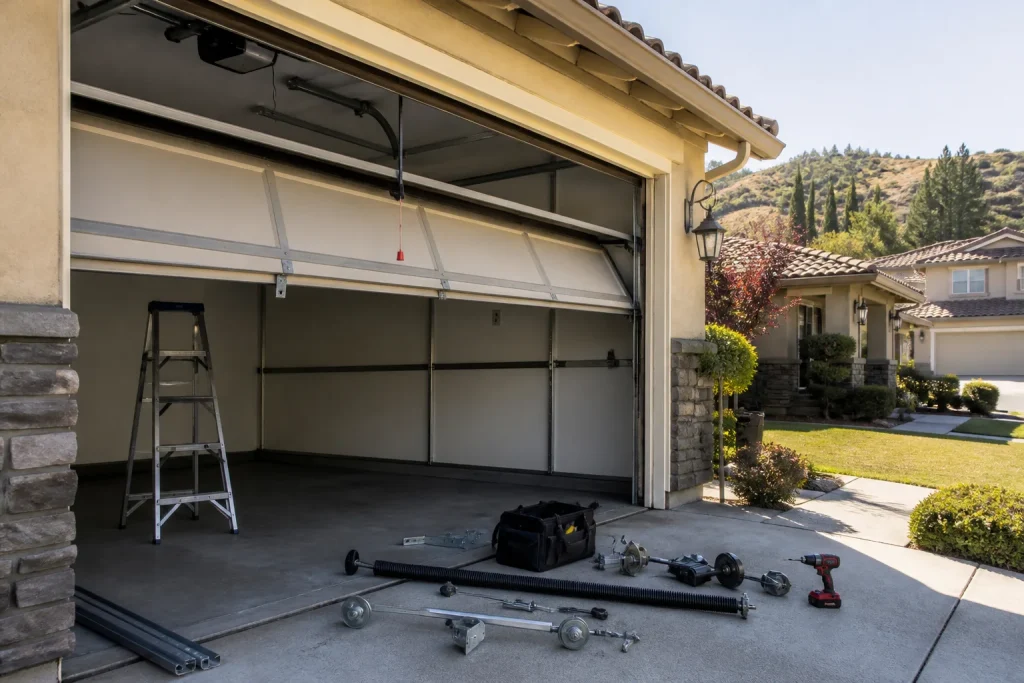
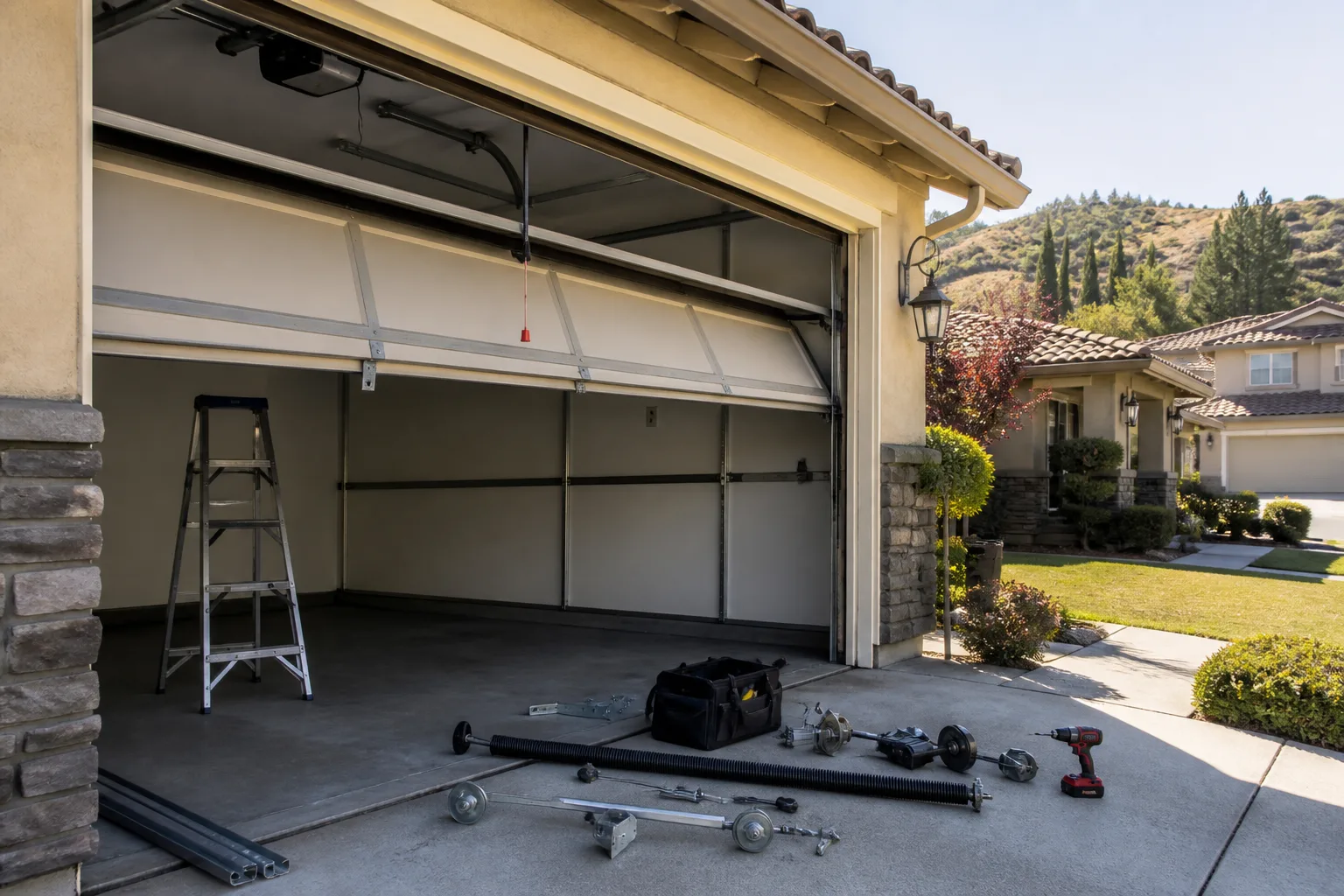
The five costliest mistakes homeowners make with garage door parts are: installing mismatched torsion springs, reusing worn cables with new springs, substituting generic hardware for door-rated fasteners, lubricating the wrong components, and skipping balance testing after repairs. Each of these errors can turn a $200 fix into a $1,200 replacement, or worse, cause sudden failure that damages your car or injures someone nearby. If you’d rather not risk it, Beacon Garage Door California offers free estimates in San Jose — call (866) 780-5452.
The most dangerous thing we regularly see isn’t a homeowner who skipped maintenance — it’s one who partially fixed their torsion spring. A spring with the wrong wind count or a mismatched IPPT rating will fail faster and more violently than one that was simply worn out. After nine years and 464 jobs across San Jose, from Willow Glen to Almaden Valley, we’ve been called in to undo enough DIY and cut-rate repairs to know exactly which part mistakes keep repeating. Here’s what actually goes wrong, and why it matters.
1. Installing Mismatched Torsion Springs
Torsion springs aren’t interchangeable. Every spring has an IPPT rating — inch-pounds per turn — that must precisely match your door’s weight, track radius, and drum size. We’ve found springs in San Jose garages that looked identical to the originals but were off by two full IPPT points. The door felt fine for three weeks, then the opener burned out trying to lift an unbalanced load.
Here’s what actually needs to match:
- Wire size (measured in thousandths of an inch, not eyeballed)
- Inner diameter (typically 1.75″ or 2″ for residential doors)
- Total coil count and active winding turns
- Wind direction (left-wound vs. right-wound, determined by spring placement)
- IPPT rating calculated from door weight, not guessed
We use a calibrated scale and manufacturer spec sheets for every spring we install on Clopay, Amarr, Wayne Dalton, or Craftsman systems. Guessing based on “looks about right” is how you get a spring that coils too tightly, stresses the cables, and snaps within months. When a torsion spring fails under tension, it releases stored energy instantly. We’ve seen them punch through drywall and dent car hoods. This is not a component where close enough works.
When to call a pro: If you don’t have the door weight, drum specs, and a winding bar set, don’t touch the spring system. We carry computerized spring calculators and stock sizes for all major brands.
2. Reusing Old Cables When Replacing Springs
Cables wear invisibly. The internal strands fray long before the outer jacket shows damage, and by the time you see rust or broken wires, the cable has already lost significant tensile strength. We pulled a set last month in a Cambrian Park garage where the homeowner had replaced springs six months earlier but kept the original cables. One cable snapped during a routine open, dropping the 16-foot door onto their workbench.
The problem is cyclical fatigue. Cycles are counted every time the door opens and closes. A typical residential door sees 1,500–2,000 cycles annually. Cables are rated for roughly 10,000 cycles under ideal conditions, but corrosion from San Jose’s occasional heavy winter rains, friction from misaligned pulleys, and abrasion at the bottom bracket accelerate wear dramatically.
Spring replacement changes the dynamic load on cables. New springs apply force differently — often more smoothly, which can stress previously compensated weak points in old cables. We replace cables and springs together as standard practice. The incremental cost of cables is negligible compared to replacing a door section, or worse, explaining to your insurance why a 200-pound steel panel landed on your vehicle.
3. Using Generic Hardware Instead of Door-Rated Fasteners
Hardware store bolts look right. Same diameter, same thread pitch, sometimes even the same head style. But garage door carriage bolts are graded for cyclical shear loads that standard Grade 5 hardware isn’t designed to handle. We’ve stripped hinge bolts in North San Jose that were replaced with big-box store equivalents, usually after the homeowner noticed a wobbling roller or sagging track.
The difference is in the metallurgy and head design. Door-rated carriage bolts have a square neck that locks into the hinge or bracket, preventing rotation during the thousands of open-close cycles that loosen standard bolts through micro-movement. The shank is also hardened differently to resist the repeated shock loading of a 150–400 pound door accelerating and decelerating.
Specific places where we’ve seen generic hardware fail:
- Hinge bolts connecting door sections — loosening causes panel misalignment and roller binding
- Track mounting bolts to the wall angle — failure here drops the entire track
- Opener arm connection points — stripped threads separate the door from the safety reverse system
- Bottom bracket fasteners — the highest-stress connection on the door, where cable tension concentrates
We source hardware from Clopay and Amarr supplier networks, not the fastener aisle. If you’re disassembling anything that holds tension, use the bolt that was engineered for that specific load path.
4. Lubricating the Wrong Parts
More lubrication is not better lubrication. We’ve opened San Jose garages where every moving surface was dripping with WD-40, including the bottom brackets, lock mechanisms, and track interiors. Some of those doors were unsafe to operate.
Here’s what actually needs lubricant and what doesn’t:
- Lubricate: Roller bearings (if steel, not nylon), hinge pivot points, torsion spring shaft and bearings, chain or screw drive opener rails. We use lithium-based garage door grease, not penetrating oil that attracts grit.
- Do not lubricate: Bottom brackets (where cables attach under extreme tension — grease attracts debris and can mask cable wear), lock mechanisms (gumming up with dust and grease prevents proper engagement), track interiors (rollers need clean, dry contact for consistent rolling; lubricant causes slip-stick motion that wears rollers faster).
We serviced a door in West San Jose where the homeowner had oiled the bottom brackets for three years “to prevent rust.” The accumulated grime hid cable fraying until one bracket bolt sheared from corrosion fatigue. The cable whipped free and the door slammed down. If you’re unsure which points are safe to touch, we include lubrication service with every maintenance call — we’ll show you exactly what gets what.
5. Skipping Balance Testing After Spring or Cable Work
This is the one check that tells you whether everything else was done right. A properly balanced door stays at any position you leave it — halfway open, three-quarters, anywhere in the travel. If it drifts up or down, the spring tension is wrong, and the opener is fighting the imbalance every cycle.
We test balance on every spring or cable job in San Jose, and we find problems on roughly 30% of doors we didn’t install — usually from previous repairs where this step was skipped. The test is simple but requires a functioning knowledge of what you’re feeling for:
- Disconnect the opener by pulling the emergency release.
- Manually lift the door to waist height and release.
- A balanced door holds position. A heavy door crashes down. A light door drifts up.
- Repeat at full open and near-closed positions.
An unbalanced door burns out openers prematurely, damages door sections from uneven stress, and creates safety reverse failures. We’ve replaced $400 openers that failed because they were compensating for a $50 spring adjustment someone skipped. After nine years, we don’t consider a job complete until the balance test passes at three positions and the safety reverse triggers correctly on the contact test.
Related services in San Jose: If you’re dealing with a broken spring, worn cables, or a door that just doesn’t feel right, our garage door repair team handles emergency calls and scheduled maintenance across the area.
The Bottom Line
Mismatched springs, old cables, generic bolts, wrong lubrication, and skipped balance checks — these five mistakes don’t just fail to fix your door. They actively create bigger problems that cost more to undo. In our experience across 464 jobs, the repairs that take longest aren’t the original breakdowns. They’re the secondary damage from a part that was almost right.
If you’re in San Jose and something about your door doesn’t feel correct, or you’ve already started a repair and want a second set of eyes before finishing, Beacon Garage Door California offers free estimates. Kevin and his team work on your brand — whether it’s a Craftsman opener from 2012 or a new Wayne Dalton system — and we’ll tell you exactly what it needs, not what pads a bill. Call (866) 780-5452.
Frequently Asked Questions
No, you should replace torsion springs in matched pairs even if only one is broken. Springs are calibrated as a system, and an old spring has different tension characteristics than a new one. Mismatched spring life causes uneven lifting, premature opener failure, and dangerous binding. Call (866) 780-5452 for a free estimate on proper spring replacement in San Jose.
Inspect where cables wrap around the bottom bracket and drum. Look for broken outer strands, rust blooming between wires, or flat spots where the cable has kinked. If you’ve replaced springs within the last two years and kept the original cables, they should be inspected regardless of appearance. We replace cables with every spring job as standard practice — call for a safety check.
Use white lithium-based garage door grease on roller bearings, hinge pins, and spring shafts. Avoid WD-40 or penetrating oils — they evaporate and attract grit. Never lubricate tracks, bottom brackets, or lock mechanisms. If you’re unsure which points are safe, our maintenance service includes proper lubrication and a full safety inspection.
Secondary damage from incorrect parts typically runs $400–$1,200, depending on whether the opener, door sections, or hardware were affected. A failed spring installation that drops the door usually requires panel replacement plus proper spring and cable work. Getting it right the first time is almost always cheaper. Call (866) 780-5452 for an exact quote — estimates are free.
Written by Kevin Ardila, Founder & Lead Installer at Beacon Garage Door California, serving San Jose since 2017.
Need Garage Door Help?
Call Beacon Garage Door California — licensed & insured, here with fast after-hours help in California.
(866) 780-5452